
Coconut Drift Maldives
Guesthouse island in Baa Atoll. Its reef is measured from satellite; guest reviews live on the booking sites.
Book Coconut Drift Maldives
Check availability for Coconut Drift Maldives. One tap opens the hotel on a booking site, where you’ll see the live price and choose your dates, rooms and guests.
Prices & availability by Stay22, updated live. We may earn a referral — never a placement, and it never affects a score.
House reef & underwater
Coconut Drift Maldives · Baa Atoll · a shared island reef
Very Good house reef
Reef Conditions · top 34% of the 297 reefs we have measured
Shore entry Measured
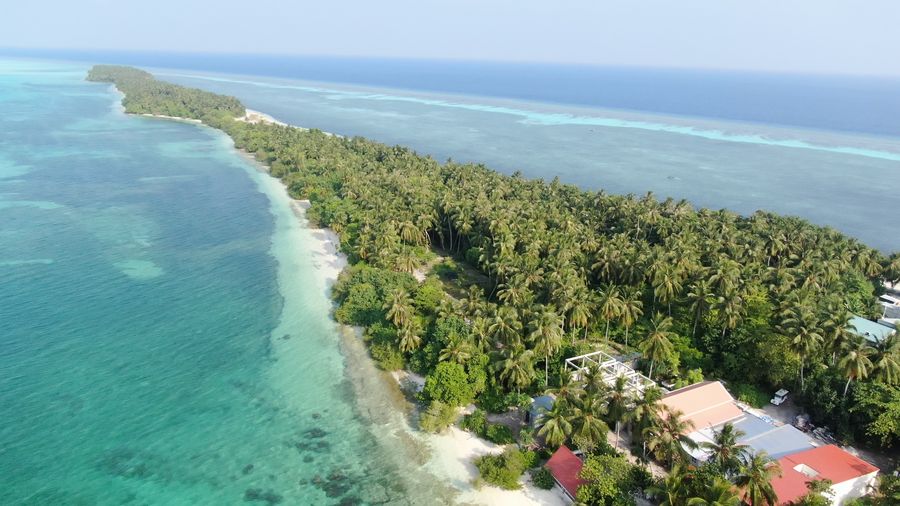
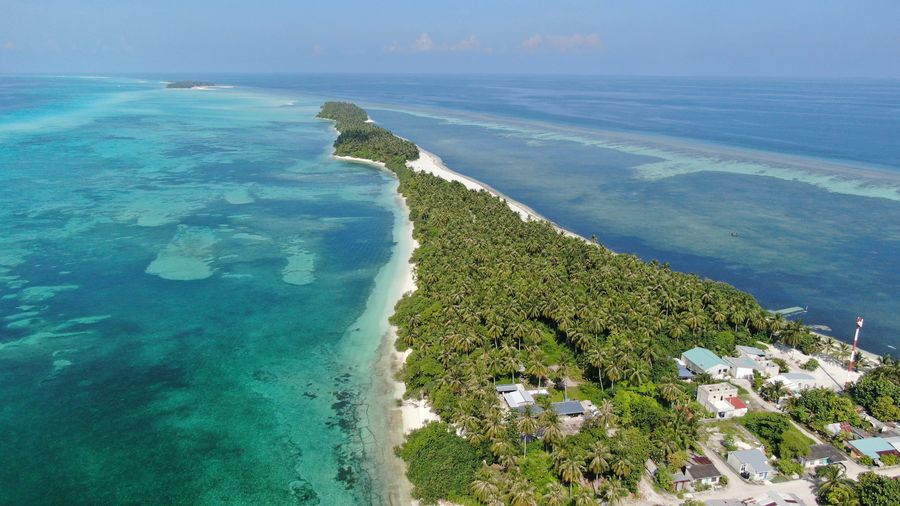
~177 m across the lagoon to the drop-off — a genuine swim, not a wade.
Living cover Measured
About 33% of the mapped reef reads as living coral or algae from satellite.
Heat history Measured
Peak heat stress 5.55 DHW since the imagery, 2 bleaching-alert years on record (2016, 2024).
From satellite this reef reads Very Good — roughly 33% living cover. We have not surveyed it in the water, so fish counts and big-encounter ratings stay pending. We don't estimate them.
Reef data modelled from Allen Coral Atlas benthic & geomorphic maps (CC BY 4.0) and NOAA Coral Reef Watch. No in-water survey — every figure above is a measurement. Marine icons: game-icons.net (CC BY 3.0).
Reef manta ray
Overwhelmingly a southwest-monsoon animal here, on the atoll’s eastern flank. Over 95% of acoustic detections at eastern Baa fell in the southwest monsoon, with near-zero activity in the northeast. Across more than a thousand survey days at Hanifaru, feeding was recorded on roughly 62% of them. Hanifaru alone accounted for 64% of detections in its site cluster.
Reef manta ray — the feeding window
Within the season, the timing is tidal rather than merely monthly. Mass feeding is driven by zooplankton concentrated by a back-eddy that Hanifaru’s particular reef shape creates, so spring tides around the full and new moon are the windows that matter. The largest “cyclone” feeding events happen only a handful of times a season.
Whale shark
Feeds here in the southwest monsoon alongside the mantas, drawn by the same plankton — but in far smaller numbers than South Ari: on the order of 95 sightings of 53 individuals across a decade.
Turtles — no atoll-level seasonal study exists; treat them as year-round residents rather than a season
Reef sharks — no atoll-level seasonal data
Photos
Where it is
4.88215, 72.96736The pin is the island centroid from our geocoding, not the building — properties on the same island share it. Satellite imagery © Esri, Maxar, Earthstar Geographics.